
Buying a House with No Money Down: Your Guide to First-Time Homeownership
The dream of owning a home often comes with a daunting question: "How can I afford a down payment?" For many first-time homebuyers, the idea of saving tens of thousands of dollars can feel like an insurmountable obstacle. But what if I told you that owning a home with little to no money down is not only possible but a reality for countless individuals?
Forget the myth that you need a huge lump sum to become a homeowner. This comprehensive guide will walk you through the various strategies, programs, and tips that can help you achieve your homeownership dreams, even if your savings account isn't overflowing. We'll explore everything from government-backed loans to down payment assistance programs, all designed to make buying a house a tangible goal for you.
Let's dive in and demystify the process, empowering you with the knowledge to make your first home a reality.
Understanding the "No Money Down" Landscape
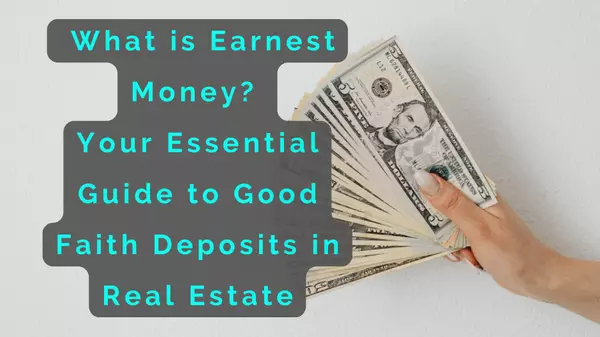
Before we delve into specific programs, it's crucial to understand what "no money down" truly means in the context of homeownership. While it implies you won't need a traditional 20% down payment, there are still some costs associated with buying a home that you'll need to consider. These typically include closing costs (fees paid at the close of the real estate transaction) and potentially some earnest money (a deposit showing your serious intent to purchase). However, even these costs can often be financed or covered through various programs, which we'll explore shortly.
The key takeaway here is that "no money down" doesn't mean "no costs whatsoever," but rather a significantly reduced upfront financial burden, making homeownership accessible to a much wider audience.
The Power of Government-Backed Loans: Your First Line of Defense
One of the most effective ways to buy a home with little to no money down is through government-backed loan programs. These loans are insured or guaranteed by federal agencies, reducing the risk for lenders and allowing them to offer more favorable terms, including lower down payments.
1. FHA Loans: A Popular Choice for First-Timers
What they are: FHA (Federal Housing Administration) loans are perhaps the most well-known and widely used government-backed loans, especially for first-time homebuyers. The FHA doesn't directly lend money; instead, it insures loans made by approved lenders. This insurance protects lenders in case of default, allowing them to offer loans with lower credit score requirements and, most importantly, lower down payments.
Down Payment: FHA loans typically require a minimum down payment of just 3.5% of the home's purchase price. While not "zero," this is significantly less than the traditional 20% and can be much more manageable for many. For example, on a $250,000 home, a 3.5% down payment would be $8,750.
Credit Score Flexibility: FHA loans are also known for their more lenient credit score requirements. While specific requirements vary by lender, you can often qualify for an FHA loan with a credit score as low as 580 (with the 3.5% down payment) or even lower (with a 10% down payment).
Other Considerations:
-
Mortgage Insurance Premium (MIP): FHA loans require both an upfront MIP (which can be financed into your loan) and an annual MIP (paid monthly). This insurance protects the lender.
-
Property Requirements: The home must meet certain FHA appraisal standards to ensure it is safe, sound, and secure.
-
Loan Limits: There are limits on the maximum loan amount you can obtain, which vary by county.
Why it's great for you: If you have a decent credit score but limited savings, an FHA loan can be your golden ticket to homeownership. The low down payment requirement makes it incredibly accessible.
2. VA Loans: A Well-Deserved Benefit for Service Members and Veterans
What they are: VA (Department of Veterans Affairs) loans are an incredible benefit for eligible active-duty service members, veterans, and their surviving spouses. These loans are guaranteed by the VA, which allows approved lenders to offer them with exceptionally favorable terms.
Down Payment: The biggest advantage of VA loans is that they require absolutely no down payment for most eligible borrowers. This is a true "no money down" option!
Credit Score Flexibility: While there's no official VA-mandated minimum credit score, lenders typically look for a score of around 620 or higher.
Other Considerations:
-
Funding Fee: Most VA loans require a one-time funding fee, which helps offset the cost of the program to taxpayers. This fee can often be financed into the loan. However, some borrowers, such as those receiving VA disability compensation, may be exempt.
-
No Mortgage Insurance: Unlike FHA loans, VA loans do not require private mortgage insurance (PMI) or a mortgage insurance premium, even with 0% down. This can lead to significant savings over the life of the loan.
-
Eligibility: You must meet specific service requirements to qualify for a VA loan.
Why it's great for you: If you or your spouse has served our country, a VA loan is an unparalleled opportunity to buy a home with no down payment and no mortgage insurance. It's a powerful benefit that should be explored by all eligible individuals.
3. USDA Loans: Rural Living Made Affordable
What they are: USDA (United States Department of Agriculture) loans, also known as Rural Development loans, are designed to promote homeownership in eligible rural and suburban areas. Like FHA and VA loans, they are government-backed.
Down Payment: USDA loans are another fantastic "no money down" option, offering 0% down payment for qualified borrowers.
Credit Score Flexibility: Lenders typically look for a credit score of 640 or higher for streamlined processing, though lower scores may be accepted with additional underwriting.
Other Considerations:
-
Geographic Eligibility: The most crucial requirement is that the property must be located in an eligible rural area as defined by the USDA. Many areas that feel suburban still qualify, so it's worth checking the USDA's eligibility map.
-
Income Limits: There are income limitations based on the household size and the specific area. Your household income cannot exceed 115% of the median income for the area.
-
Guarantee Fee: USDA loans require both an upfront guarantee fee (which can be financed) and an annual guarantee fee (paid monthly), similar to FHA's MIP.
Why it's great for you: If you're open to living in a qualifying rural or suburban area and meet the income guidelines, a USDA loan can be a phenomenal way to purchase a home with no money down.
Beyond Government Loans: Down Payment Assistance Programs
Even if you don't qualify for a 0% down government loan, or if you want to further reduce the upfront costs of an FHA loan, down payment assistance (DPA) programs can be a game-changer. These programs are typically offered at the state, county, or city level and are designed to help homebuyers cover their down payment and/or closing costs.
How DPA Programs Work:
DPA programs come in various forms, but here are the most common types:
-
Grants: These are essentially free money that does not need to be repaid. They are often tied to specific loan types (like FHA) and may have income or property location requirements.
-
Forgivable Loans: These are loans that are forgiven over a certain period (e.g., 5-10 years), as long as you remain in the home and meet other program requirements. If you sell or refinance before the forgiveness period ends, you may have to repay a portion of the loan.
-
Deferred Loans: These loans typically don't require monthly payments and are only due when you sell, refinance, or pay off your first mortgage.
-
Second Mortgages: Some DPA programs provide assistance in the form of a second mortgage with a low interest rate, which you repay alongside your first mortgage.
Key things to know about DPA programs:
-
Availability Varies: DPA programs are highly localized. What's available in one county or state might not be in another.
-
Income and Credit Requirements: Most DPA programs have income limits and minimum credit score requirements, though these are often designed to assist moderate-income buyers.
-
First-Time Buyer Focus: Many DPA programs are specifically geared towards first-time homebuyers.
-
Combine with Other Loans: DPA can often be combined with FHA, VA, or USDA loans, helping you achieve a truly minimal or even zero out-of-pocket cost. For example, if you use an FHA loan with a 3.5% down payment, a DPA program could provide that 3.5%, making your out-of-pocket down payment $0.
How to find DPA programs:
-
Your State's Housing Finance Agency (HFA): Most states have an HFA that administers various homebuyer programs, including DPA.
-
Local City/County Housing Departments: Check with your local government for programs specific to your area.
-
Lenders: Many lenders are well-versed in local DPA programs and can help you identify eligible options.
Other Strategies to Reduce Upfront Costs
Beyond specific loan programs and DPA, there are additional strategies that can help minimize your out-of-pocket expenses when buying a home.
1. Lender Credits
In a competitive market or if you have strong credit, your lender might offer "lender credits" to help cover some of your closing costs. These credits typically come in exchange for a slightly higher interest rate on your loan. It's a trade-off, but if your goal is to reduce upfront costs, it can be a viable option. Always compare the total cost over the life of the loan to see if it makes financial sense for you.
2. Seller Concessions
This is a powerful strategy where you negotiate with the seller to have them contribute towards your closing costs. In many loan programs (like FHA, VA, and conventional loans), there are limits to how much a seller can contribute. For example, FHA allows sellers to contribute up to 6% of the purchase price towards closing costs. This means you could potentially negotiate a slightly higher purchase price in exchange for the seller paying a significant portion of your closing costs.
Example: You offer $255,000 for a home listed at $250,000, with the condition that the seller pays $5,000 towards your closing costs. If the home appraises for $255,000, this can be a win-win: the seller gets their desired price, and you significantly reduce your cash outlay.
3. Gift Funds
If you have a supportive family member or friend, gift funds can be used for your down payment and/or closing costs. Most loan programs allow for gift funds, but there are strict rules:
-
Documentation: The lender will require a gift letter signed by the donor, stating that the money is a gift and not a loan (meaning no expectation of repayment).
-
Source of Funds: The donor's bank statements may be required to show the source of the funds.
-
Relationship: The donor usually needs to be a relative or someone with a very close personal relationship, depending on the loan type.
Gift funds can be a fantastic way to bridge the gap if you're close to affording the down payment or closing costs but need a little extra help.
Building Your Foundation: Credit and Budgeting
While the focus of this article is on "no money down," having good financial health is still crucial for securing favorable loan terms and making homeownership sustainable.
1. Credit Score is King (or at least a very important duke)
Even with lenient programs, a better credit score will always open more doors and lead to better interest rates. Before you seriously start house hunting:
-
Check Your Credit Report: Obtain free copies of your credit report from AnnualCreditReport.com. Review them for errors and dispute any inaccuracies.
-
Pay Bills on Time: Payment history is the most significant factor in your credit score.
-
Reduce Debt: Lowering your credit utilization (the amount of credit you're using compared to your available credit) can boost your score.
-
Avoid New Debt: Don't open new credit cards or take out large loans right before applying for a mortgage.
2. Budgeting for Homeownership: Beyond the Mortgage Payment
While minimizing your upfront costs is key, remember that homeownership comes with ongoing expenses. Before you buy, create a realistic budget that includes:
-
Mortgage Payment: Principal, interest, taxes, and insurance (PITI).
-
Utilities: Electricity, gas, water, sewer, trash, internet.
-
Homeowner's Association (HOA) Fees: If applicable.
-
Maintenance and Repairs: Set aside a percentage of your home's value annually for unexpected repairs and routine maintenance. This is crucial!
-
Emergency Fund: Have a liquid emergency fund for unforeseen circumstances.
A solid budget will ensure that your "no money down" dream doesn't turn into a financial nightmare.
The Home Buying Process: A Step-by-Step Overview
Now that you know how to finance your home with little to no money down, let's briefly touch on the general steps of buying a house:
-
Assess Your Finances & Credit: Review your credit reports, improve your score, and get an idea of your budget.
-
Get Pre-Approved for a Mortgage: This is a crucial first step. A lender will review your financial situation and tell you how much you can borrow. This shows sellers you're a serious buyer.
-
Find a Real Estate Agent: Work with an experienced agent who understands your needs and the local market. Make sure they are familiar with low-down-payment and DPA programs.
-
Start House Hunting: Begin looking at homes that fit your budget and criteria.
-
Make an Offer: Once you find "the one," your agent will help you craft a competitive offer, potentially including requests for seller concessions.
-
Undergo the Appraisal and Home Inspection: These steps protect your investment. The appraisal ensures the home's value supports the loan, and the inspection identifies any major issues.
-
Finalize Your Loan: Work with your lender to complete all necessary paperwork and conditions.
-
Attend the Closing: Sign all the final documents, and the home is yours!
Success Stories: It's Possible!
Let's imagine a couple, Sarah and David, who dreamed of owning a home but had limited savings. Sarah is a public school teacher, and David works in a local non-profit. They had decent credit scores (around 680) but only about $5,000 saved.
They started by getting pre-approved for an FHA loan, which required 3.5% down. For a $280,000 home, this would be $9,800. They thought they were still short.
However, their real estate agent connected them with a local lender who specialized in first-time homebuyer programs. The lender identified a state-level DPA program that offered a forgivable second mortgage for up to 3% of the purchase price, specifically for FHA borrowers meeting income limits (which Sarah and David did).
With the FHA loan, their out-of-pocket down payment was still $9,800. But with the DPA providing 3% ($8,400), their remaining down payment need was reduced to $1,400.
During negotiations, their agent skillfully asked the seller for a 2% seller concession ($5,600) to cover some of their closing costs. The seller agreed, recognizing the strength of Sarah and David's offer.
In the end, Sarah and David used their $5,000 savings: $1,400 for the remainder of the down payment, and the rest for remaining closing costs and establishing a small repair fund. They moved into their first home, paying almost nothing out of pocket for the down payment itself, thanks to a combination of FHA, DPA, and seller concessions.
This isn't a fairy tale; it's a common scenario for informed first-time homebuyers leveraging the programs available to them.
Conclusion: Your Homeownership Dream Awaits
Buying a house with no money down, or very little money down, is not a pipe dream. It's an achievable goal, especially for first-time homebuyers willing to do their research and explore the various programs designed to help them.
Take the time to understand FHA, VA, and USDA loans. Investigate the down payment assistance programs available in your specific area. Work on improving your credit score, and build a realistic budget for homeownership.
The path to your first home might not be the traditional 20% down payment route, and that's perfectly fine. With the right knowledge and guidance, you can unlock the door to homeownership and begin building equity, creating stability, and enjoying the many benefits that come with having a place to call your own. Don't let the down payment myth deter you any longer – your homeownership journey starts now!
Categories
Recent Posts